Terry Hershey Blog

Delight and Pennies


While a young mother waits at a post-office-counter, her four-year-old daughter occupies herself with the opportunity for self-entertainment, exploring the lobby, looking, prattling, not an item left untouched.

The girl finds a penny on the floor.  “Look momma,” she says proudly, “a penny!” 

Her mother, busy with a clerk at the window, mumbles an acknowledgment.  Others in line smile, while some shake their head and cogitate about the regrettable decline in discipline.  The girl walks to the other side of the lobby and places the penny back onto the floor.  Feigning surprise, she says, “Look mamma, I found another penny!” 

Delighted, she keeps at her enterprise, placing the penny in a different location, until she has found five pennies, each one of them brand new.

We must risk delight.
We can do without pleasure,
but not delight.
Jack Gilbert

Yes, the story is infectious in its charm.  But then… my “consumer mentality” kicks in.  And I want to know the answer to the “HOW” question.  You know, “how do we live that way?”  After all, it must be a matter of technique.  So… what are the steps?  And what is the secret?

Rabbi Israel Baal Shem Tov  (1698-1760 and founder of the Chassidic movement) was asked: “Why is it that Chassidim burst into song and dance at the slightest provocation? Is this the behavior of a healthy, sane individual?”

The Baal Shem Tov responded with a story:  Once, a musician came to town–a musician of great but unknown talent. He stood on a street corner and began to play. Those who stopped to listen could not tear themselves away, and soon a large crowd stood enthralled by the glorious music whose equal they had never heard. Before long they were moving to its rhythm, and the entire street was transformed into a dancing mass of humanity.

A deaf man walking by wondered: Has the world gone mad? Why are the townspeople jumping up and down, waving their arms and turning in circles in middle of the street?

“Chassidim,” concluded the Baal Shem Tov, “are moved by the melody that issues forth from every creature in God’s creation. If this makes them appear mad to those with less sensitive ears, should they therefore cease to dance?”

They dance because they have tapped (in the words of George Fowler) the “unmined gold” that is inside.
Infectious indeed. “Look mamma, I found another penny!”

Okay.  So here are the steps. 

Step #1: Sometime today, take delight.  It sounds so simple.  And yet, we find any number of ways to rob delight of its essential joy. 

(I love to cook… the tastes, scents, a glass of wine, the camaraderie, the process.  But this week I saw an infomercial for the magic bullet, which promises to make the fastest omelet ever, in 10 seconds or less.  So now, cooking has changed; from a delight, to a race.  Someone please tell me, this is beneficial… how?)

In our earnest need to focus on the correct way (or the fastest way, or the approved way), we keep both delight and the dance in check.  After all… what if, God forbid, it all gets out of hand?  I saw this sign posted by a large company’s HR department: “No hugging, touching or complimenting.”  No complimenting?  Yes, because we all know how excessive complimenting can be a serious liability.  

Ballet artist George Balanchine  was asked, “What is your ballet about?”
“Just dance,” he responded.
“Yes, but what’s it about?”
Finally, he said, “I’d say it’s about fifteen minutes.”
Maybe, just maybe… it’s about the dance.  

Physical and spiritual growth cannot be reduced to mechanics. I’m all for getting the mechanics right, but spiritual growth is more than a procedure; it’s a wild search for God in the tangled jungle of our souls, a search which involves a volatile mix of messy reality, wild freedom, frustrating stuckness, increasing slowness, and a healthy dose of gratitude. Mike Yaconelli 

“In Hebrew the opposite of holy is chol, which is translated not as ‘profane’ but as ‘empty’; in other words, ‘not yet filled.’” writes Irwin Kula .  “The word for holy in Hebrew is kedusha. A more accurate translation of kedusha is ‘life intensity.’  To be holy is to be intensely dynamic, ever-changing, and ever-realizing.  The Biblical command ‘You Shall Be Holy’ is an invitation to celebrate what philosopher Mark Taylor calls ‘a maze of grace that is the world.’  Live as richly and passionately as possible; that’s as close to meaning as you will get.”  
 
Step #2: Share your delight (your discovered penny) with someone else.

Tonight I sit on my back patio (enjoying my glass of Bordeaux), and drink in the solitude, the birds at the feeders, the energizing spring air and the vibrancy from the outrageous buds on the peonies, swollen and ready for their annual floral cabaret.  “Look,” I say to the sky, “I found another penny!”

To experience delight is a risk.  And to share it with someone is also a risk.  But when we do so, we are affirming that there is indeed another way…
In this life, we can risk loving. 
We can risk living less than tidy lives. 
We can risk asking for less than perfection from others (and ourselves). 

In a glance.  In a word.  In a touch.  In a gesture, there is healing and kindness and hope… and the permission to dance is offered.  We cannot change the pain in our lives or the lives of others.  But we can accompany each other, and along the way, look for pennies…  

Posted in delight | Tagged , , , , , , , , | Leave a comment

Grace and a Conga Drum


The year is 1953. Eleven-year-old Mike is diligent about his paper route, setting aside money to buy the desire of his heart. His parents tell him that he can spend the money he earns on what ever he wants (as long as it isn’t illegal or immoral).

Mike saves twenty dollars. From a working class family in the 1950s, twenty dollars is a lot of money. One ordinary Tuesday, while walking downtown, Mike passes a music store. There, in the window, standing all by itself, is the most beautiful conga drum he has ever seen. It is almost as tall as he, barrel-shaped, smooth, dark and light wood alternated around a laminated exterior. A round, chrome frame stretched the thick animal skin tightly over the top of the drum. Before the day is over, Mike gives the owner $20, and walks home, the proud owner of a conga drum. (He proudly shows it to all his friends, and although none of them knew how to play any kind of a drum, it doesn’t stop them from pretending.)

Mike was not prepared for his Father’s anger.
What is that?
A drum.
How much did you pay?
Twenty dollars.
That’s too much!
Their exchange was followed by silence, and then the words from his father that Mike will never forget: “TAKE IT BACK!”
Mike stood stunned while his new drum slowly slid from his side onto the kitchen floor.

The incident never left Mike.

As if there was a kind of permanent flinch, inside of him; as if his “grace credit card” could be canceled.
Mike became an ordained minister. As a preacher, Mike talked about God’s love. But the incident with his Father nagged him. What if he got it wrong?
What if this God would–like his own father–take his love back? 

Mike Yaconelli writes in his book, Messy Spirituality, “Parked somewhere in my sub-conscious is the belief that grace and forgiveness are lavish, unconditional and limited. Cross God one too many times, fail too often, sin too much, and God decides to take his love back. It is so bizarre, because I know Christ loves me, but I’m not sure he likes me and I continually worry that God’s love will simply wear out.”

Years later, Mike shares the story of the drum (at a retreat co-led with his son Mark), and talks about God’s love. During his talk, Mark walks to a curtain behind the stage and brings out a gift for his father: a brand new conga drum. Mike stares at the drum and his son, until someone in the crowd shouts, “Just take the drum!” After a 47-year wait he does just that. This time with tears in his eyes, listening to his son say, “You deserve this one Dad, no one is taking it back.”

Somehow we are not wired for grace. There is in all of us a need to prove something. Something about our value tied to performance.
Just think of the way we greet one another.
What did you do today?
What have you done for me lately?

And God forbid if our answers fall short.

I’m not a fan of religion. Especially when it means that we need to tidy up, to sit up straight, to keep our nose clean, to earn something, while deep down, assuming that we are fooling everyone, somehow pulling a fast one.

Public opinion is a big deal in this culture. And we easily believe our press releases, and Lord knows we find solace in moral rectitude.

But here’s the deal: God wants us to let go of our desire to appear good, so that we can listen to the word within us and move in the mystery of who we are. This preoccupation with protecting the perfect image, of being a model Christian or model spouse / parent / friend leads to self-consciousness, pedestal behavior (“look at me“), and bondage to public opinion. So for God’s sake, give up being a saint. It’ll be a lot better for everyone in your life.

I was raised in a church that didn’t believe in dancing. (Come to think of it, they didn’t believe in anything that spawned pleasure of any kind, and though I can’t prove it, I think they were opposed to giggling as well.) As a teenager, church camps would have bonfires for the sole purpose of burning anything that came between us and God. (I wish I were making this up.) And one thing was certain: We knew God hated rock ‘n roll. The preacher told us so. With a puffy livid crimson face. I can still see it in my mind.

In High School, my favorite 45 (no, we had no ipod), was The Beatles, The Long and Winding Road (the A side). (I’m not sure how I acquired it, under my parents radar.) This I know; I used to play it over and over and over, and let the music carry me to some kind of bliss. And now, the preacher told me that my record was an occasion to sin. (This is an odd turn of phrase, since the music brought me such unconditional delight).

On a summer night, my vinyl-45-record burned, with many others, and we watched the smoke carry our sinful ways into the Michigan sky. I told this story a few times at various retreats.

Fast forward thirty years. I am speaking in the Anaheim Convention Center. Two friends walk up to the stage and present me with a slim cardboard mailing box. On the outside is written, Amazing Grace. On the inside, a 45 vinyl record, circa 1970, The Beatles, The Long and Winding Road.

I am certain of this: there was more grace in that gift than any sermon I have ever heard. Not to rain on anyone’s parade, but I can’t see God unless there is skin attached.

And now that I’m on the subject of sermons, and it being just after Easter and all… my best memory? After church, as a kid, after we sang “Christ the Lord is Risen Today,” and we were told that Jesus is still alive, we would go to my Grandmother’s house to hunt Easter eggs and stuff ourselves with chocolate. My favorite part of the day? My grandmother’s hug, when she would whisper in my ear, “Do you know how much I love you?” Now that, that is the true power of the resurrection.

When I was young, faith was about believing the right things.
I no longer think that is true.
Now I know. Faith is about love.
And grace.
And inclusion.
And conga drums. 

So. How do we tap into, or access this reservoir of love? And how do we hear God whisper, I’ll never take back my unconditional love for you?

This has not been an easy week, with the news of the Boston Bombing. Our prayers are with all affected. Because of its capriciousness, and absent any immediate specific or concrete news, it’s so easy for our knee-jerk to be fear and insecurity. Whatever we had, we tell ourselves, someone is going to take it away.  

Speaking of the resurrection story, here’s my favorite sentence from Matthew’s Gospel. Jesus says to the women, “You’re holding on to me for dear life! Don’t be frightened like that. Go tell the others.” 

It’s simple really.
Go and tell.
Spill the light.
Give a hug.
Pay it forward.
Pass on the conga drum.
Or if you can, share a long lost vinyl 45.       

Posted in Uncategorized | Tagged , , , , , , , | 2 Responses

Remember

In the small Fannin County Hospital, local ministers take turns being chaplain for a week. Fred Craddock tells about one of his assigned weeks when a baby was born. It creates quite a stir, because not a lot of babies are born in a thirty-bed hospital. Fred writes, “I went there, about nine in the morning, and saw a clan of people gathered, looking though the glass at a little bitty new baby.”

“Is it a boy or girl?”  

“It’s a girl.”

“What’s the name?”

“Elizabeth.”

“Is the father here?”

Someone pointed, and Fred saw a young man leaning against the wall.

“I’m the father,” the young man told him.

“Baby’s name is Elizabeth?”

“Yeah.”

“She’s a beautiful baby.”

Elizabeth was squirming–you couldn’t hear through the glass–but she was squirming, and red faced and all like that. Thinking the father may be concerned, Fred told him, “Now, she’s not sick. It’s good for babies to scream and do all that. It clears out their lungs and gets their voices going. It’s all right.”

The young man nodded, “Oh I know she’s not sick. But she’s mad as hell.”

And then, “Pardon me, Reverend.”

Fred said, “That’s all right. Why’s she so mad?”

“Well wouldn’t you be mad? One minute you’re with God in heaven and the next minute you’re in Georgia.”

Fred thought, Man, I’ve got myself a real mountain Gnostic here. This guy’s been reading Plato. He asked, “You believe your daughter was with God before she came here?”

“Oh yeah.”

“You think she’ll remember?”

“We’ll that’s up to her mother and me. We’ve got to see that she remembers, ’cause if she forgets, she’s a goner.”


It’s easy to forget isn’t it? What with the cacophony and pace of life.

Which begs the question: how does one remember? And why is it so easy to forget?


Here is the world. Beautiful and terrible things will happen.  

Don’t be afraid. Frederick Buechner


Okay. But somehow you’d think we make this journey a lot easier on ourselves.


This past week was a clear reminder of what we are up against. I had several conversations with people–some very close to me–who feel overwhelmed, exhausted, derailed, diminished and disheartened. “Tell me,” they asked, “where is the hope?” I had no answer. Not that didn’t sound scripted and insincere. 

Here is what I do know: this world is fragmented. As if that’s not enough, we internalize the untidiness or unrest or sense of scarcity as the message. In other words, it becomes the lens through which we see the world, our life and our identity. (Whatever is honored will be cultivated.) 


Remember as children, we sang–right index finger raised–“this little light of mine, I’m going to let it shine.”

“You are the light of the world,” Jesus reminded us.

And yet, we read it as a command rather than an affirmation.

Here’s the deal. He never said, “Create the light. Contrive the light. Design the light. Engineer the light.” He said simply, “Let.” Meaning “allow.” Meaning, the light is already there.  

Inside of us.  

Now.


Like the little girl in a Georgia hospital, we arrived with it. And each soul and each light is unique and imprinted by God, and we are invited to break out of the minimum-security prison of conformity or fear or smallness in order to experience our soul’s true power and story. 


Sufficiency isn’t two steps up from poverty or one step short of abundance. It isn’t a measure of barely enough or more than enough. Sufficiency isn’t an amount at all. It is an experience, a context we generate, a declaration, a knowing that there is enough, and that we are enough. Lynne Twist


This sounds good.

So. When and how do we tune into our heart and listen? To remember. 

And why do we so easily “give up?” There are no tricks, much as we’d like. (Lord knows I’ve read enough self-help books where I feel worse after.) You see, when I view “remembering” as some kind of exertion, I fall short whenever I don’t step up my game. That’s when we double-down on whatever derails us. As if we can muster enough will-power to get ourselves out of a pickle. And (to make matters worse), we believe that the “remembering” has to do with data, so we focus on creeds and correct theology and accurate advice.


Apparently, you are the light is not enough.  

No wonder we need someone to remind us. Which means that where and when we go to remember is as important as the remembering itself.


Gabrielle Roth reminds us, “In many shamanic societies, if you came to a shaman or medicine person complaining of being disheartened, dispirited, or depressed, they would ask one of four questions. When did you stop dancing? When did you stop singing? When did you stop being enchanted by stories? When did you stop finding comfort in the sweet territory of silence? Where we have stopped dancing, singing, being enchanted by stories, or finding comfort in silence is where we have experience the loss of soul. Dancing, singing, storytelling, and silence are the four universal healing salves.”


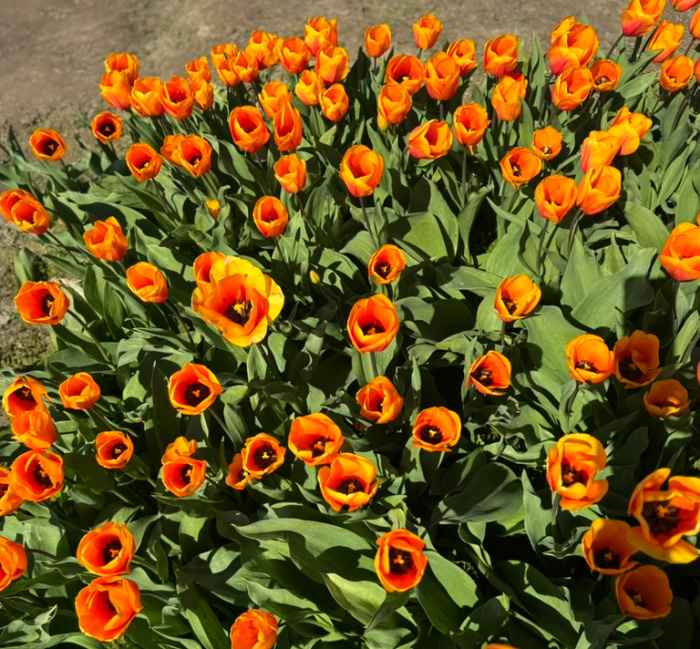
Here in the Pacific Northwest we’ve had a Spring Day unable to make up it’s mind. From gloomy to an unrelenting hailstorm to an afternoon giving way to a blue sky with brush stroke clouds. The light does wonders to the colors in the garden, leaves–new shoots on the roses a translucent cranberry red–and blooms–butter yellow tulips. And the light, thankfully, does wonders to my spirit. It almost makes me want to dance.

Posted in Uncategorized | Tagged , , , , | Leave a comment

Lagniappe


In the town of Bay St. Louis, Mississippi, there is a church named Lagniappe (lan-yap). It is an old Creole word that means “something extra.” Pastor Jean Larroux explains, “Down here if you go into a seafood shop and order a pound of shrimp and they put in an extra handful, that’s the lagniappe. It’s something you can’t pay for. Something for nothing. Something for free.”

In an area devastated by Hurricane Katrina, Jean began this church, in his words, with people “primed for grace.”

Accustomed to teaching church people how to celebrate, Jean was surprised to find himself in a community of people who already knew. Even in the middle of their hardship.

Here’s the good part.
This celebration–from lagniappe–is not predicated on life as we expect it.
The party doesn’t start when our fear is gone.
The party doesn’t start when our beliefs are unadulterated.
The party doesn’t start when our circumstances make it feasible.
Most likely, if we wait for all that, we miss the resurrection every time.

Just like the twosome on the Road to Emmaus. Looking for “answers,” they missed the resurrected Jesus. “But were not our hearts burning within us?” they said.

Lagniappe is what Easter is all about. When I was a kid Easter was about believing the right things (even when I wasn’t sure), and saying the right things (it helped to speak loudly) and pointing fingers at those who didn’t see it the way I did. And then after church we hunted eggs and ate enough chocolate to make even our Baptist parents pray for Happy Hour.

Did you know that the Greek translation of the Gospel of Mark stops in the middle of a sentence? It’s not so neat and tidy as we want to make it, and ends oddly, like a great TV-season-finale, leaving us wanting more.

But maybe that’s good. We get hung up on our need for control and a future we can predict.  

It’s scary to think that God is alive and able to do things so far beyond our prediction and beyond our control. The future is wide open. We can participate in it, but we’re not in charge, and we are a people who like to be in charge of stuff. We like to predict. We like to figure out when the economy is going to get better and plan for it. Resurrection just blows all of that away. -Rev. Brian Hiortdahl

Robert Capon is unequivocal, “(The religious man) deals God a king and an ace and God pushes the cards away and says, ‘Look, I don’t want to take your money. You can’t play with me. The odds are always on the house here and besides, no matter how full you think your deck is, you haven’t got a full deck and you can never win playing this game of cards with me. So why don’t you just be like that fellow over there who is looking at his shoes and the two of you go over and have a free drink and enjoy yourselves because you can be home free here if you will only stop this nonsense of trying to sell me, trying to win over me, trying to get an arm up on me, to do something to me to prove that you are okay. I don’t care that you are not okay. I will raise you from the death of your lack of okayness. I will raise you up. Just trust me. That fellow over there, all he said was he was no good. He threw himself in trust on me. He’s home free because all the dead are home free in my working of the universe, in my reconciliation of the world. All you have to do is recognize that death is the key to your salvation.’”

Lagniappe.

It means that the party has been staged on our behalf. While Christians celebrate Easter, our Jewish brothers and sisters celebrate Passover and the Seder meal.
Both stories about how nothing–absolutely nothing–can separate us from God’s relentless pursuit to set us free.  

Remember this day, on which you went free from Egypt, the house of bondage, how Adonai freed you from it with a mighty hand.
Book of Exodus
 

So. The party is on. Regardless.

And here’s the deal: There’s only one requirement–bring who you are.
This is not about who you are supposed to be.
Or who you should be.
This is not about the denial of pain and suffering.
Or the denial of grief and loss and hardship.
Or even the denial of death.

It is about what the people of Bay Saint Louis knew. If there’s a party, jump in with both feet. Jean says, “they take every drop of juice out of the lemon that they can get, and they love it.”

Jean’s story reminded me of the One More Time Around Marching Band (OMTAAMB). They march every year in the Portland, Oregon Rose Parade. The OMTAAMB is believed to be the largest permanent marching band in the world. Made up of former high school, college and military marching band members, the ages of its 500 members range from 19 to 85. Members come from far away places just to perform with the band each year–in recent years there are members from California, Florida, Ohio, Japan and New Zealand. Their uniform? White pants and a yellow (or red) t-shirt. Their prerequisite? Love of music. 

Lagniappe.
Today the thermometer read 72 degrees. Which is like saying July arrived 4 months early. Which is another way of saying, especially in Seattle, “This is too good to be true. And we’re going to pay for this down the road.”  Lord have mercy. The hoops we jump through to convince ourselves that we are undeserving of any drop of grace.
So. I jumped into the day with both feet. And spent much of it fussing and futzing–and delighting–in my garden. When it was time to sit a spell, I’d watch the pair of mallards float on the pond. (Our cats watched too.) Finches flocked to our feeders. In the garden, the flowering-red-currant has begun to bloom, extravagant, with nodding raspberry red blooms; and great clumps of mango-yellow daffodils glow and shine, even in the fading dusk light.

Note: Jean Larroux story from Sin Boldly, Cathleen Falsani

Posted in Uncategorized | Tagged , , , , , , , | Leave a comment

Secret of Life


This week I had an extra day in Washington DC. A perfect opportunity to literally “spend” a day. As I left the hotel, I told Mark, at the front desk, “I’m off to explore.”
“Then do me a favor,” he said, smiling, “can you find me the secret of life?”
“I’ll give it a shot,” I told him, “but I’ll need most of the afternoon.”

No, of course, I didn’t expect to find any secrets for Mark, but was willing to be surprised. There are moments in our day when it wouldn’t hurt to suspend disbelief.

I can tell you this; I did need a good day to replenish and feed my spirit. It’s been submerged of late. Or in some way, dimmed. Maybe some of you can relate.
(To be sure, self-pity is gratifying for a spell. But after enough time, it sits heavy in your heart, like some anchor welded to the bow.)

So. On Saturday I walked the National Mall, from the Capital Building to the Washington Monument, along the reflecting pond, ending up seated on the steps of the Lincoln Memorial. For the entire walk, laughter permeates the air, the National Mall an open space teeming with families, groups, friends, couples; some walking, some parked on blankets picnicking, a few of the young snapping FB photos, striking goofy poses. Ambling seems the pace of choice. On this spring day, with cherry blossoms only a week away from their full glory, the temperature still requires a coat, but sunlight drenches the air, the sky and the mood.

There is hope. Even in DC.

Fred Roger (“Mr. Rogers”) calls Yo-Yo Ma one of the “great appreciators of our world. It seems that people always walk taller after they’ve had an encounter with him. The only thing that’s larger than his talent is his heart.”

Mr. Rogers tells the story about a day he was privileged to sit in on one of Yo-Yo Ma’s master cello classes. “During that master class one young man was struggling with the tone of a certain cello passage. He played it over and over and Yo-Yo listened with obvious interest. Finally, Yo-Yo said, “Nobody else can make the sound you make.” That young man looked at Yo-Yo Ma and beamed. What a gift those words were not only to that cellist, but to everyone who was there. Nobody else can make the sound you make.”

Well, nobody else can live the life you live. And even though no human being is perfect, we always have the chance to bring what’s unique about us to live in a redeeming way. Fred Rogers 

On Saturday, as I walked among the myriad of people, I tried to see with Mr. Rogers’ lens: Inside of everyone a light shines. Inside of everyone, there is a sound that no one else can make.

Here’s what resonated… It is an affirmation I needed to hear.

Perhaps it is always easier to believe an affirmation about others than it is to believe it about ourselves. The light inside does dim from time to time. The sound is muted. And if we’re honest we know how easy it is to live small or to be diminished; by shame or exhaustion or discouragement.

When you walk the National Mall, you pass several of the Smithsonian’s, and on the corner of 14th, the Holocaust Memorial Museum. However (I am telling myself), if the point of my walk is to lift my spirits, I’m not sure if spending time revisiting the Holocaust seems well-timed. In the museum are stories of undeniable evil (whether acts of commission or omission) and our capacity for demeaning and dehumanizing and absurd cruelty. They are not easy stories to see. Nor should they be.

However. Let me tell you what else I found in that museum on Saturday. Stories of hope. Voices of men, women, children–who in the midst of cruelty and malice and hatred…
let their voice be heard,
let their light shine,
let their sound and their music ring out for the world to hear.

For the dead and the living we must bear witness. Elie Wiesel

There is hope. Even in darkness.

Here’s the deal: the affirmation–no one can make the sound you make–can make all the difference.

If we let the affirmation take root,
We can choose
We can act
We can risk
We can forgive
We can redeem
We can bear witness
We can be the light of the world
In this dance we call life
On this planet we call home

Mark greets me upon my return to the hotel for my luggage. “So,” he asked, “Did you find it?”
“I did,” I told him. “But first, I discovered that walking miles reminds me I need more exercise.”
“More importantly,” I said, “The secret of life is that nobody else can make the sound you make.”
“I get it,” he told me. “It’s not the pencil, it’s how you sign your name.”
I said my goodbyes and caught a cab to the airport. I smiled all the way knowing that he didn’t need me to look for the secret after all.

Posted in Uncategorized | Tagged , , , , , , | 1 Response

Blessed


In a memorable M*A*S*H* episode, there is a wounded bombardier who thinks he is Jesus. 

The camp is mixed. Some say he’s crazy, most say he’s doing an act in order to get discharged from the Army.
One person in camp believes him. Radar O’Reilly.
It’s time for the man’s release. Radar walks out to the jeep where the man sits. “Excuse me, Jesus, sir. Could you bless my friend?”
“Yes,” the man replies.
And Radar pulls his Teddy Bear from behind his back. Jesus blesses the bear.
“Excuse me, Jesus, sir. Could you bless me?”
“Yes, Radar.”
Radar steps back in deference. “Thank you. And my name. It’s not Radar, sir. It’s Walter.”
Bless me.
What is Radar asking for? Many say that to “be blessed” is to be granted God’s favor and protection. (And just for the record, this is not a game rigged in the favor of people with more faith or favor. Blessing plays no favorites.) Other definitions include the bringing of welcome pleasure or relief. Another, to be consecrated or made holy.
Regardless of the definition, there is good news in all of this.  We live in a world where we are bombarded–daily–by the need to achieve, or pursue; where we are rewarded by having more, or by being “somebody.”
But here’s the deal: To be blessed, is to know that place of no striving.
To be blessed, is to know that place of rest.
To be blessed, is to know that I am loved by a gracious Creator, and that I can own and celebrate my identity–this identity–knowing that it, and it alone, is enough.

Extraordinarily, blessing begins quite simply… with the affirmation of my name.

There is a similar story in the Gospel of John. Mary is looking for Jesus. He’s not where he is supposed to be (in the grave). She is weeping. She’s lost what she needed for stability.
She sees a man (she assumes is the gardener), and asks, “Please tell me where you’ve put him.”
And Jesus (the man Mary believes to be the gardener) says only one word, “Mary.”And in that one word, her name, is the blessing.   

 The blessing is the permission to be. 
Without the need for absolute security.

Or certainty.

Or answers.

Or striving.

So Bless me.

Not for what I’ve done or failed to do.
Just Terry.

 This reminds me of a story I told a few weeks ago. It still stays with me, and resonates. About a family who went out to a restaurant for dinner. When the waitress arrives, the parent give their orders. Immediately, the five-year-old daughter pipes up with her own: “I’ll have a hot dog, french fries, and a Coke.” “Oh no you won’t,” interjects the dad and turns to the waitress he says, “She’ll have meat loaf, mashed potatoes, milk.” Looking at the child with a smile, the waitress says, “So, hon, what do want on that hot dog?” When she leaves, the family sits stunned and silent. A few moments later the little girl, eyes shining, says, “She thinks I’m real.”  

Yes.

That is what resonates. Someone thinks–believes, affirms– that I’m real.
We all know what it’s like to not be seen. Or to be missed. Or misunderstood. Or marginalized. To not be real. (And we tend to exaggerate it all by internalizing the tapes, playing them, Lord knows why, in the end buying whatever rhetoric and fabrication they are selling.)

Someone thinks I’m real. It’s not my accomplishments or my accouterments or my masks or my roles or my achievements. To be blessed is to know that in that moment, I can just BE.

Mary.
Walter.
Terry.

I had such a moment today. After a long week on the east coast, I spent St. Paddy’s Day working in my garden. Yes, a Guinness awaited me at the end of my day. I filled the bird feeders. And waited to see if the pair of Mallards–who have adopted our pond each spring–would return. There are those lucky days, when the sun illumines the moss on the rocks in the stream, and the daffodils glow faithful and sanguine around the Cedar tree, and the candied scent of Sarcococca transports you back to a high school dance when the best-looking girl in town really did want to drape her arms around your neck during all the slow numbers. Yes. There are those lucky days when public opinion means something only to pollsters and politicians, when you realize that the elastic jurisdiction of what they think cannot find you here in this little corner of the globe, and you raise your face to the stars and shout to no one in particular “if this isn’t nice, what is?” 
And all my striving ceased. And I knew. I am blessed indeed.

Posted in Uncategorized | Tagged , , , , , , , , | 1 Response

Unabashed


Like most small towns in America, summer brings a festival. (I know we are several weeks off from summer, but it never hurts to anticipate.) A weekend of festivity, gastronomic adventure and community identity. On Vashon Island we celebrate the Strawberry Festival. A long time ago, there were strawberry fields on our island. No more. But the festival name persists. (I think in large part because those enormous banners are very expensive to replace.) 

On festival weekend, Saturday night is dance night. We’re a one-horse, one-street town. So our main street is shut down, and becomes our dance floor under dusk light that lingers until well past ten.

At 7 pm, the Portage Fill-Harmonic fills the night air with big band swing music. The musicians are all islanders who play for the love of music. We know them as our neighbors, carrying out their daily jobs, but on this night, it is their avocation, which takes center stage. The cares of the world drift into the sky on the wings of the music.

At 9 pm, we shift gears, and the mood gives way to Great Divide and old-time Rock and Roll (for the uninitiated, this is music which predates 1973).

And everybody dances.

Five years ago, my son Zach–aged 10–stirred by the music, charged to the front of the pack, near the stage. And he began to… well, I’m not sure what to call what he began to do. It was a combination of jujitsu and tai chi and Saturday Night Fever. All fueled by sheer and unabashed delight.

Other dancers began to make room for this enthusiastic young artiste. And his presence was known. People near me–as I stood near the back of the crowd–began to point and laugh, out of solidarity I suppose, but even so, I could feel my heart skip a beat.

“Look at that kid,” they said. (Actually, since this is a small island, they said, “Look at Terry’s kid.”)

I took a step forward. I confess to you that my knee jerk response was to go toward the stage, in order to rescue or protect my son.

Rescue from what, I wonder? From fear or embarrassment or awkwardness or shame?  Is public opinion that severe?
“What will they think?” swirls, a question still ingrained from my childhood.
Did I fear that others would consider his spectacle extravagant and unrestrained? (Lord knows I’d hate to have a group uncomfortable on my account, just because I was delighted.)

We all wrestle with some internal governor prescribing some need for moderation or temperance, which translates, “it’s time to put the kibosh on all manner of joy or ecstasy or elation or God forbid, wholeheartedness.”

Here’s the deal: When we give way to such a shackling measure, we put a lid on our passion and our spirit, and we short-circuit the bounty and generosity that would spill from our heart.

This all begs the question: What is the reason we internalize this script, and how does it procure its power?

In other words… why, oh why, do we allow ourselves to live so small?

Gladly, on that Saturday night, I did not take a second step.
Instead, I took a step back.
Because I realized that what I felt was not shame.
It was not chagrin.
No. What I felt, was pride. My son experiencing and touching and relishing what I too desired. I recognized that there will be many experiences in his life that will dampen or quench that spirit, and I don’t want to be one of them.

Through my tears, I watched him dance.

After two songs he raced back to us, animated, “Mom and Dad, did you see that? Wasn’t I great?”
“Yes, indeed, son. You were great.”

At some point every single one of us is connected to a life source, or life force–a grounded place of ecstasy, joy and hope. And it wells up and spills out to all around us.

Before we get ahead of ourselves, it helps to remember that this isn’t something you learn or add or acquire. Unabashed joy is already inside. It springs from within. It is a well of abundance that you draw from.  

“This little light of mine, I’m going to let it shine.”

So. Have you taken to the dance floor lately?
I wonder… What are the ways we cover the light that is within?
Let’s turn that question on its head, shall we? What bounty can we tap into? What well can we draw from?

I tell this story now because it captures the events of my past week.

On March 3rd, I walked the Selma bridge to commemorate Bloody Sunday. To commemorate courageous and spirited individuals who were willing to say that this life-force of joy and hope and justice and reconciliation is available to all. 

These marchers were told, “Not now. Don’t rock the boat now.” Public opinion rears its ugly head again… and thankfully those who marched or sang or danced or sat, did not listen. John Lewis, Ralph Abernathy, ED Nixon… Rosa Parks.      

And I spent this past week with Principals–from the schools of the Diocese of Fresno, men and women working hard to create environments where children blossom and question and flourish and push boundaries.

Last night on Vashon, a concert of our local Free Range Folk Choir–music from around the world, including music from South Africa. The story is told about the tactics police would use to dissuade any “protest” gatherings during Apartheid. What the police couldn’t stop, was church, where South Africans worshiped and sang. And at some point during church, the members would stand, singing, and walk out of the church. When confronted by the police, they responded, “But we’re not protesting, we’re singing.”

I witnessed this life force for good, for meaning, for compassion, for celebration, for justice… alive and well in Montgomery. And in Fresno. And on Vashon.  

And I witnessed it in a 10-year-old, dancing his heart out. 

When we don’t play small…
We honor the heart.
We savor the miracles in ordinary moments.
We right wrongs.
We let joy ring out.
We nurture hope.

Let freedom ring.
Let dancers dance.
Let hope live.

Posted in Uncategorized | Tagged , , , , , , , | Leave a comment

Pilgrimage

Today I walked across a bridge. The sun shines down from a bleached blue sky. The air may by cool, but our spirits don’t notice, as we stand and sing under the sign, Edmund Pettus Bridge. We are in Selma, Alabama on Bloody Sunday.

And no, after today I will never be the same.

I came to Alabama for a pilgrimage.
As it turned out, I walked smack dab into an epiphany.
Or perhaps, the epiphany walked into me.
Either way, it wasn’t in my plans.

I find that I navigate my days a little easier when I have some semblance of control. It’s just that epiphany and control are not to be found in the same sentence.

On Friday morning I was honored to join a group of new friends on the 13th Annual Congressional Civil Rights Pilgrimage. We gathered at the University of Alabama in Tuscaloosa. (I want to reassure my friends from Notre Dame that the football national championship game was not mentioned. At least not more than twice.)

On June 11, 1963, history was made when James Hood and Vivian Malone walked through two white wood doors at Foster Auditorium to enroll at the University, the first African American students in the school’s history.


Their action proved all the more courageous, given that they needed to pass the Governor himself as he stood in that doorway, defiant in his intolerance and the fanaticism that still reverberated from his inaugural address, “Segregation now, segregation tomorrow, segregation forever!” said Governor George Wallace.

I cannot imagine their courage or their fear. I can imagine that they shook more than just a little on the inside, and wondered, if only fleetingly, “Is it worth it? Maybe, this is a good time to turn around.”

I walk past the ordinary white wood doors–now enshrined in the lobby of the renovated Foster Auditorium–into a gymnasium with fellow pilgrims to hear the words of Dr. Sharon Malone (Vivian Malone’s sister) and Peggy Wallace Kennedy (the daughter of Governor George Wallace).

Diminutive in stature, Peggy is still youthful and carries a Southern grace in her face and demeanor. I had no expectations for her address (save for my skepticism radar in all matters having to do with the heart and reconciliation). In story form she took me to a swing-set outside a family home where a 13-year-old girl swung, unaware of the fateful remarks made by her father, a 13-year-old girl who would grow up pondering and wrestling with what it would mean to live under the shadow of her father’s words.  

While her story is a long way from that of a nine-year-old boy in rural Michigan, we did have one thing in common: the realization that just because a parent lives from certain script, it does not mean that script is binding to the child. At some point in her life Peggy Wallace Kennedy knew that she could choose her path, choose her script, and that she must stand where her father stood with her own son as a testament to change, to bear witness as to why she chose to say NO to exclusion and YES to the need to protect the least among us.

“So today I rise,” she told us in the gymnasium. “Today I rise to stand in the schoolhouse door. Every day I rise… to speak to a child. To comfort a parent. To offer a hand. To enable justice.”

The doors she walked through were not literal, but real nonetheless. Each and every one of us fashions a life by the choices we honor–or more fundamentally, by the doors we open, and the doors we close.

Here’s the deal: There will always be a door to hope or gratitude or respect or worth or kindness or delight or compassion or mercy or dignity or vulnerability or value or opportunity or dreams.
And, we must first open that door to our self.
Only then do we realize that when we walk through that door, we say NO to shame or resentment or self-righteousness or fear or indifference or detachment or numbness or hopelessness or humiliation or hatred or despair.

“Count me in,” I said (on the inside), knowing full well that this will be easier said than done. Because, I tell myself, courage is not easy to come by.

On Saturday morning I stood in the kitchen of the Dexter Avenue Baptist Church Parsonage, the home to the Rev. Dr. Martin Luther King Jr. and his family from 1954 to 1960. By the time the Montgomery bus strike was achieving both success and national attention, Dr. King began receiving telephone death threats (as many as 40 a day).

“One night very late around midnight–and you can have some strange experiences at midnight–the telephone rang.” Dr. King relates the story in a later sermon. “On the other end was an ugly voice.”
“For some reason, it got to me. I was weak. Sometimes, I feel discouraged… You can’t call on Daddy anymore. You could only call on the Something your Daddy told you about, that Power that can make a way out of no way.”

And at that kitchen table, he prayed. “Lord, I’m down here trying to do what’s right… But I must confess… I’m losing my courage.”

King explained what happened next: “I could hear an inner voice saying to me, ‘Martin Luther, stand up for truth. Stand up for justice. Stand up for righteousness.’”

Maybe that’s what clicked. When I see acts of courage I see heroism, and I don’t see myself. Or I see how far I have to go. Or I see how far short I have fallen.

But I do understand tired.
And I do understand discouraged.
And I do understand the end of my resources.
 

Mother Pollard was one of the elders of Dexter Avenue Baptist Church in Montgomery, Alabama, during the bus boycott of 1955-56. When her pastor Dr. King, suggested she go back to the buses because she was too old to keep walking, she told him, “I’m gonna walk just as long as everybody else walks. I’m gonna walk till it’s over.”
King marveled. “But aren’t your feet tired?” he asked.

“My feet is tired,” she replied. “But my soul is rested.”

So tired is one thing. Being soulless is something else altogether. Mother Pollard knew this. I doubt she went to a workshop to figure it out. She just knew in her bones; that she is whole, and filled with grace and sufficiency.  

Which meant that for Mother Pollard, her rested soul allowed her to live fully into this life. (I read that the best beauty product is to actually have a life.) She walked toward, and not away from, life. This life, her life, with its contradictions, frustrations, weariness, tired feet and injustices.

Mother Pollard knew who she was. Her strength came from that place. Because she did see herself as a victim, she could live with intention, beyond circumstance or public opinion. In other words, tired feet was not an impediment. And from that soul flows tenderness, tenacity, compassion, joy, passion and justice.

I am still unpacking my trip–writing this in an airplane somewhere over the Rockies. There are many more stories I want to tell my Sabbath Moment friends, and I wish I could tell you where these stories will lead me. The truth is, I don’t know. Because in my mind, I’m still on the Selma Bridge, with no need to fight back the tears standing in the salty prism of mid-morning rainbows.

With the witness of James Hood, Vivian Malone, Peggy Wallace Kennedy, Mother Pollard and Dr. King, I do know that I will be on the lookout for doors–of compassion, forgiveness, second changes, understanding–that I can open.
And I will look for more bridges–reconciliation, grace, hope–that I can cross.

Posted in Uncategorized | Tagged , , , , , , | Leave a comment

Wide open arms


It’s already long past departure time.  I’m standing near the gate, waiting for the inbound passengers to deplane. There’s nowhere to go, and the plane will depart when it departs.  Even so, the passengers (including me) are beginning to huddle, as if our hovering will speed up the process.  We form a makeshift column, all of us wanting dibs on the precious above-seat-cargo-space.

Standing nearby, facing the now open jet-bridge-door, is a uniformed soldier.  He stands with nervous energy, conveying a restless and eager air.  He watches the door intently.  With him, a friend.  In his right hand he holds a large poster board sign, now hanging down by his side, hand stenciled in magic marker, “Welcome Home!  I love you!” 

Since he has been allowed to stand at the arrival gate (past airport security), it is evident that he is waiting for an “unaccompanied minor.”  The passengers from the inbound flight spill from the doorway.  She is the final passenger to deplane, accompanied by a flight attendant.  Around her neck, a plastic packet hangs with her documents.  She is, perhaps twelve or thirteen, although still childlike with two perfect braids.  She scans the faces; sees her father, and her smile is radiant and luminous.

There is a moment.  A pause.  And she catapults herself into his wide-open arms.  His hand-lettered sign has dropped from his hand to the floor, now immaterial, and as his daughter leans into his chest, he clutches her tightly and kisses her head.  Those of us lucky enough to witness this scene know the healing power, and blessedness of this embrace. 

No.  We do not know their entire story.  How long since their last visit?  Why have they been separated?  Has he been deployed and in “harm’s way?”  Does she live in another state, unable to frequently visit her father?

But this we do know: Every single one of us in that departure lounge wished to be in that embrace. 
Here’s the deal: in that embrace, the little girl was at home.

There is a similar story (about an embrace) told in the Gospel of Luke.  A young man leaves home in order to explore and experiment.  And “find himself.”  It doesn’t turn out like he planned.  He squanders his inheritance and his opportunity, and lives penniless.  So he decides to return–full of shame and regret–willing to be his father’s servant, as some kind of penance.  And then this sentence; “But while he was still a long way off, his father saw him and was filled with compassion for him; he ran to his son, threw his arms around him and kissed him.” 
His Father’s reaction?  Wrath? 
Hardly.  Just the opposite.  His father throws a party.  He calls for rings on his son’s fingers, shoes on his feet, and says: “Kill the fatted calf, and let us eat and be merry. My son was dead, and he’s alive, was lost, he’s found.” And they do indeed have the best of all parties, with music and dancing and everything else.

In real life, it doesn’t always turn out this way.

A fifth grade boy (in a Texas school) wrote about his “very first dad.”

I remember him
like God in my heart, I remember him in my heart
like the clouds overhead,
and strawberry ice cream and bananas
when I was a little kid.
But the most I remember
is his love,
as big as Texas
when I was born.

His teacher explained, “He’s not a very good student, although he tries.  But he’s never done anything like this (the poem) before.”  She went on, “He never even knew his real father.  The man skipped town the day the boy was born.”
 
Even so.  In all of us, there is a yearning.  A hunger. 
A need to know that we count. 
That we matter.  So we scan the “crowd” for that gaze. And the embrace that follows.  

That someone knows us, and sees us, and is willing to open their arms wide no matter what.   

The reality of true Grace is that it does not waiver or diminish.  It does not depend upon our response, performance, attitude, faith or checkered past.
It just is.
Why?  Because Grace heals not by taking shame away, but by removing the one thing our shame makes us fear the most: rejection.
In my experience, it is easier to talk about grace, than it is to embrace it.
Just as it is easier to talk about God, than to experience God.
You want certainty?
Okay.  Here’s what I know for certain:
We will not always learn from our mistakes.
We will check our phone messages even while on a silent retreat.
We will never fully understand the opposite sex, even if we compare them to planets.
The Chicago Cubs will never win a World Series. (I may get phone calls about this.)
Dancing is always good for whatever ails us.
Regardless of our best intentions, we will hurt the people we love.
Regardless of our pain, spring will always give us irises.
And.  It is not easy to fall into the open arms of love.
However.  We will only know grace through the open arms of one another.

And it is so easy to shut down. In an interview about her book The Bluest Eye, Toni Morrison says, “It’s interesting to watch what happens when a child walks into a room. Does your face light up? When my children used to walk in the room when they were little, I looked at them to see if they had buckled their trousers or if their hair was combed or if their socks were up; you think your affection and your deep love is on display because you’re caring for them. It’s not. When they see you, they see the critical face. What’s wrong now? Let your face speak what’s in your heart. When they walk in the room my face says I’m glad to see them. It’s just as small as that, you see?”

A young boy had nightmares.  The kind that make you go to mom.  (No use going to Dad, who will tell you, “Go to mom.”)”Okay,” the mom tells the boy.  “Go back to your room.  Kneel down by your bed.  Pray to Jesus and he’ll fix it.”
Back to his room.  Kneels down by his bed.  Prays.  And. . .more nightmares. Back and forth to mom.  The sixth time.  “Mom, I’m having nightmares.” “Okay honey, here’s what. . .”  “I know mom.  I’m going to my room, and kneel down by my bed and pray to Jesus.  But before I do that, can I just lay in your bed and have you hold me?”

“Yes, honey, why?”
“Because, sometimes I just need Jesus with skin on it.”

The moon is full again, and on cloudless evenings, my patio and garden are in sepia tone around midnight. It’s been a full week. From team building in Oklahoma, to a lecture on creating sanctuary gardens here in the PNW, to a day with unstinting chaplain and hospice workers in a Seattle area Hospital, to a night of revelry celebrating Robert Burns. Here’s what I learned; it doesn’t really matter the venue, we all are looking for wide open arms. Yes, we do our best to pretend that we have our act together, or that we are above overtures of compassion. But inside something gnaws. You see, we don’t trust our own goodness. So we reach out, at every opportunity, looking for mercy. I think what we have failed to see, is that the embrace we seek, is an embrace we too, are able to give.

Posted in Uncategorized | Tagged , , , , , , , | Leave a comment

Wonder


What is sacred is what is worthy of our reverence, what evokes awe and wonder in the human heart, and what, when contemplated, transforms us utterly. -Phil Cousineau

Late in her life, American poet and writer May Sarton was questioned about what she wanted to be 
when she “grew up.”
She replied: to be human.

I like it.

So.  To be human means “to be present.”  To be attentive to the life you have right now, and experience the sacred and the wonder within this present moment.

I have lived hurried and disconnected.  Sometimes, I still do.  Yet now, I’ve learned that what I want is to do less and live more.

I used to ask of myself and others: what have you accomplished?  Where are your credentials?  What does your job and your bank account say about who you are?

 Now, my questions are different:

Are there butterflies in your garden?
What are the color of loved ones’ eyes, when they are looking at you with hope? 
And when was the last time your house smelled of paper-white narcissus?
Do sunsets make you smile?
When was the last time you stood in stocking feet just to stare at the rising moon?
Have you ever seen a sunflower bloom?
Does the laughter of children do your heart good?
At what angle does the sun enter your house?


Posted in Uncategorized | Tagged , , , , , | 2 Responses
do less. live more.